Pasargad Company, designer, builder, andexecutor of suspension bridge (in unique recreational experiences)
A bridge is a structure that allows passage across obstacles like rivers, valleys, or roads without obstructing the path below. These structures make it possible to cross areas that would otherwise be challenging or impossible to navigate. There are many bridge designs, each crafted for specific functions and environmental conditions. Bridge design can vary depending on the intended purpose, terrain, materials used, and available budget.
Bridges can connect two different points across a river, valley, or other natural features. However, not every bridge needs to be a solid, fixed structure; it can also be a swaying, movable pathway known as a suspension bridge. When crossing a suspension bridge, you’re less focused on the destination and more on the moving path beneath your feet, creating an exciting, cautious journey at dizzying heights.
Suspension bridges as unique tourist attractions
Suspension bridges are bridges whose decks are supported by hanging cables. The history of these bridges dates back to the early 19th century. Suspension bridges are awe-inspiring structures that stretch across rivers and villages, linking remote areas. The intricate engineering and precise architecture involved in building these bridges are truly remarkable.
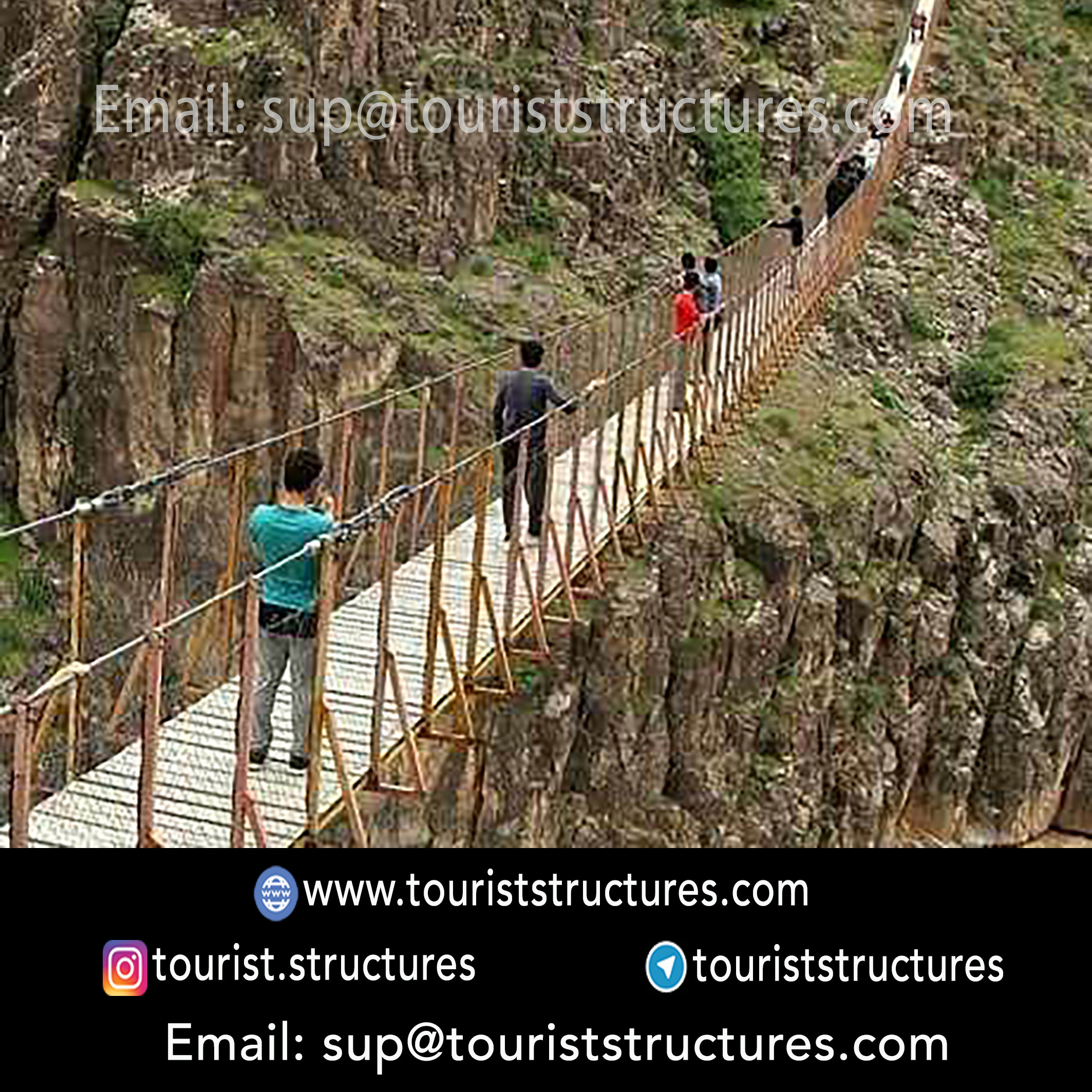
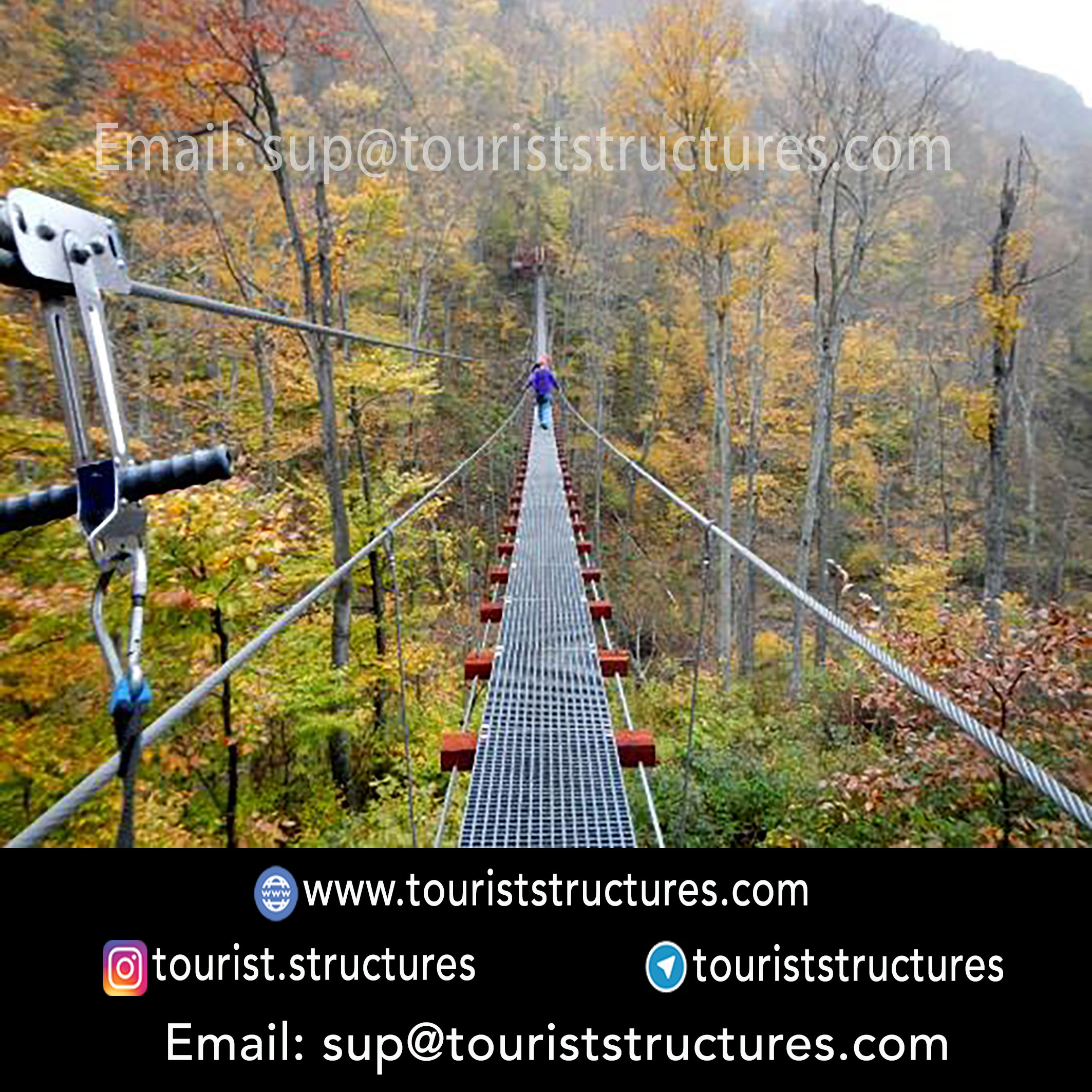
Suspension bridges; Awe-inspiringstructures that stretch across rivers
The design of suspension bridges is both simple and effective. Various techniques are used to balance the bridge’s weight for increased safety and stability. In addition to being lightweight and durable, these bridges are visually striking, with some becoming iconic photography spots.
Crossing a suspension bridge can be a thrilling challenge, even for those with a slight fear of heights.
Constructing suspension bridges, commonly referred to as cable bridges, requires a solid foundation and expert engineering. Typically built at high elevations to connect two points, they are often installed over valleys where concrete-based foundations are impractical or too costly. Suspension bridges are generally designed for pedestrian traffic, while larger versions for vehicle passage require advanced design and significant investment, with only a few examples found in highly developed countries. Steel cables and wire ropes provide the load-bearing support for these bridges.
Suspension bridges are supported by cables stretched between towers, along with vertical cables that carry the deck’s weight. A suspension bridge can be compared to a hanging ball: the string holds it aloft, allowing it to swing freely. In a similar way, the cables on a suspension bridge bear the deck’s weight, but the bridge reacts to forces like wind or sudden vehicle movements, such as swerving or braking, causing it to sway.
Load calculation in suspension bridge construction
Choosing the correct wire rope type, cable size, and connections requires calculating the approximate load on the structure. This load, with an appropriate safety factor, is then applied following engineering datasheets during the bridge’s construction. Loads on a suspension bridge aren’t only static (from the structure’s weight and people) but include dynamic loads from motion and can even include unforeseen wind impacts.
Thus, the load on a suspension bridge combines both static and dynamic forces, requiring designs with a high safety factor. A phenomenon called resonance must also be considered. In smaller suspension bridges with short spans, resonance is often negligible. However, for bridges with widely spaced supports, resonance must be included in the calculations.
Considerations before building a suspension bridge
Suspension bridges come with benefits and drawbacks that should be considered before construction. The many advantages of suspension bridges, including lower cost, fast construction, and aesthetic appeal, have led to their widespread use. Another benefit of these bridges is their wide spans, making them ideal for crossing heavily trafficked waterways.
However, it’s essential to note that suspension bridges rely on metal structures, giving them a shorter lifespan than concrete bridges. Over time, they require maintenance and replacement of parts, such as wire ropes, with technical inspections. Component replacement intervals depend on environmental conditions, a drawback of suspension bridge construction.
History ofsuspension bridges
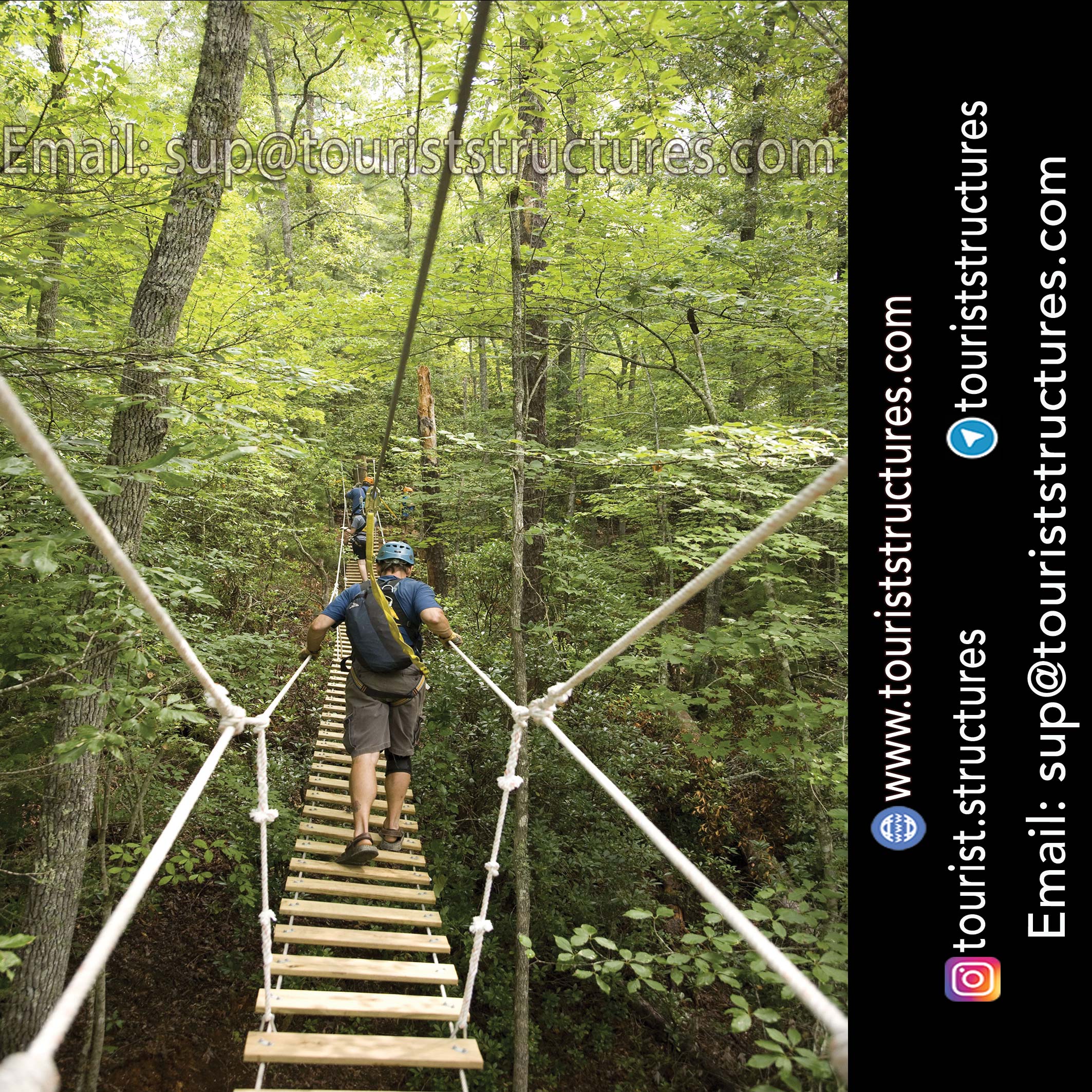
Rope bridges, the simplest type of suspension bridge, were first used by the Inca Empire in the Andes Mountains of South America about 500 years ago to cross valleys and difficult routes before Europeans arrived.
Bridges connecting different parts of mountains and cliffs are among the most naturally integrated structures. Materials for these bridges vary: some use wood and sturdy rope cables, while others use powerful metal frames and steel cables.
Cable suspension bridges and their connections
Suspension bridges held up by cables are among humanity’s oldest engineering designs, originally built to shorten distances or connect surfaces. While today’s suspension bridges use wire ropes, early versions were made from plant fibers and woven roots and branches. A stronger type of suspension bridge was constructed in 4th-century India, initially using bamboo and later incorporating steel chains.
In constructing a suspension bridge, vertical load distribution and stress transfer onto curved cables are key principles. Today, the load-bearing elements are typically wire ropes (replacing traditional plant ropes or chains) that transfer the weight to the bridge’s main supports. These supports then direct the load vertically into the ground, secured firmly by anchors.
In contemporary times, suspension bridges offer economical, engineeredsolutions for long spans. British, French, and American engineers in the late 18th and early 19th centuries faced challenges related to asymmetric loads, wind pressures, and snow in building suspension bridges. Many solutions to these issues came from German engineer Augustus Roebling. His use of trussed networks at bridge endpoints enabled the creation of robust structures, leading to notable suspension bridges over Niagara Falls, the Ohio River, and his iconic Brooklyn and Manhattan bridges in New York City.
Noteworthy suspension bridges in Iran
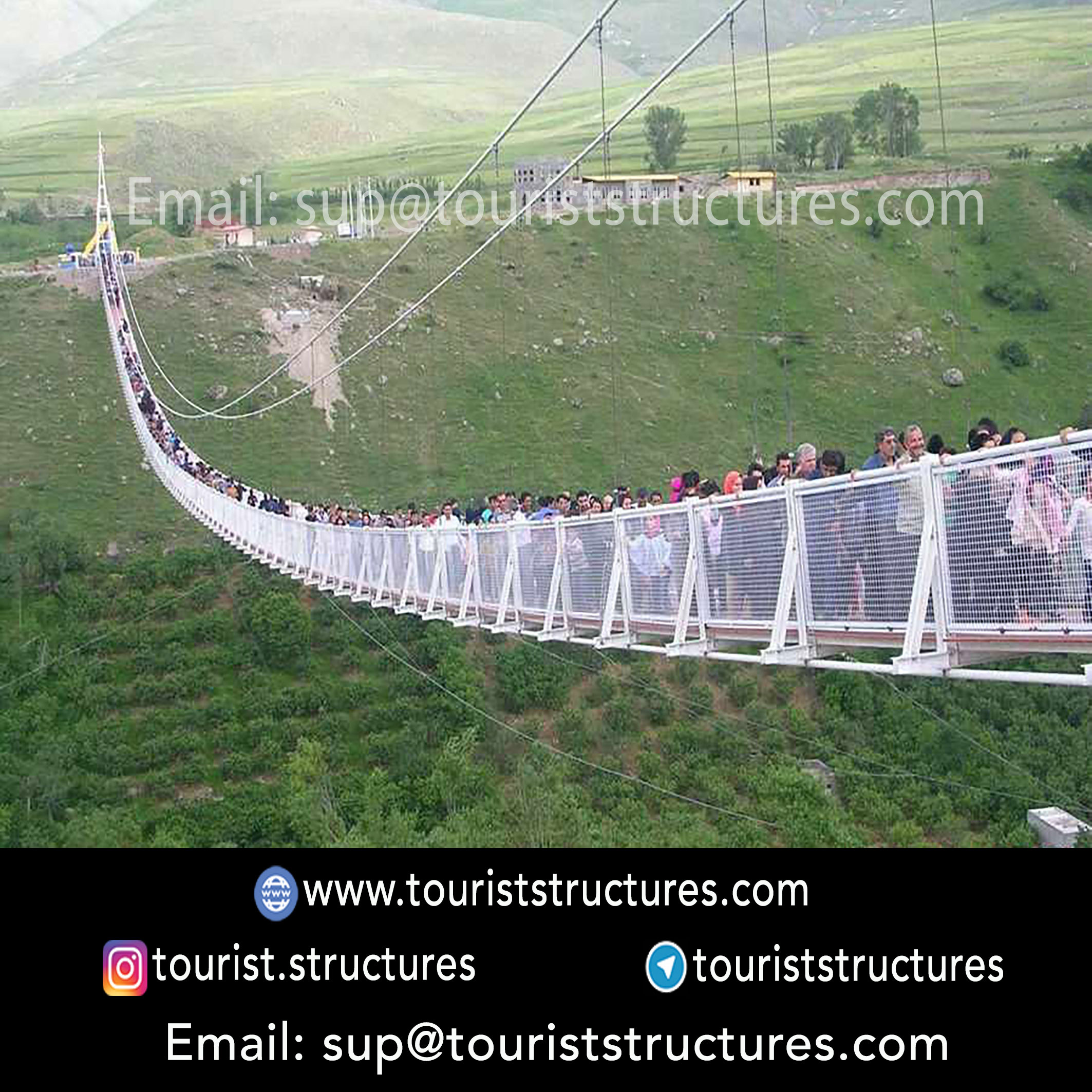
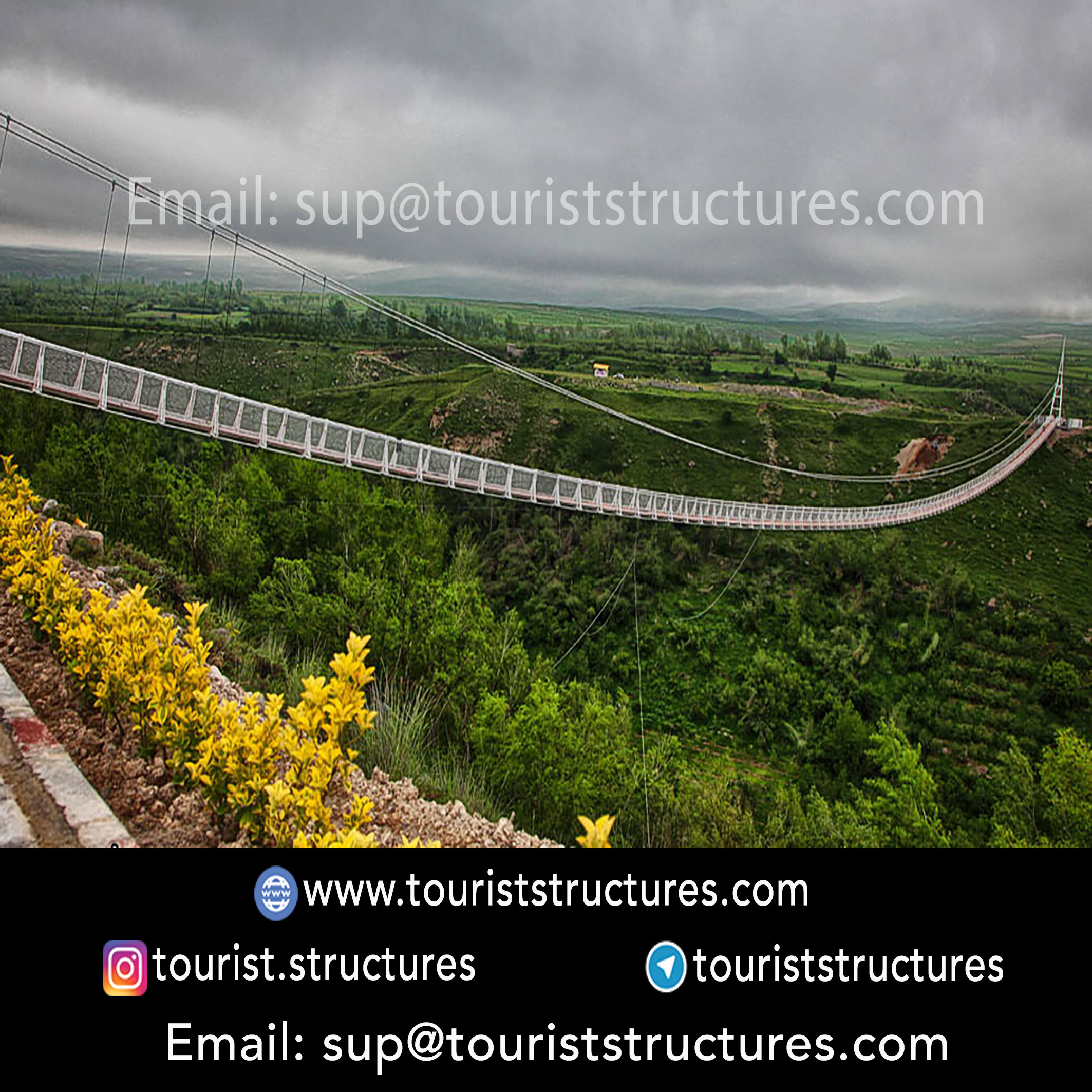
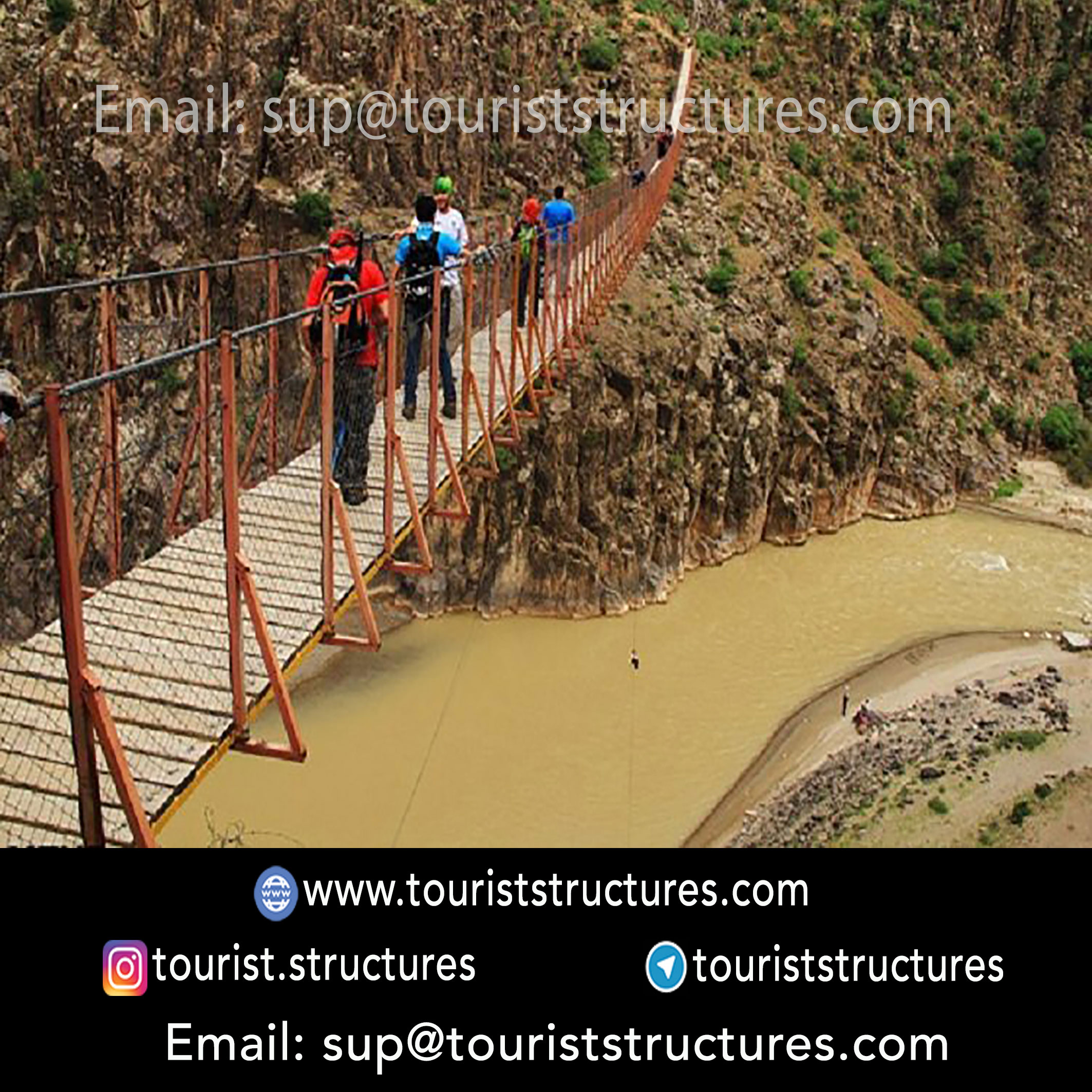
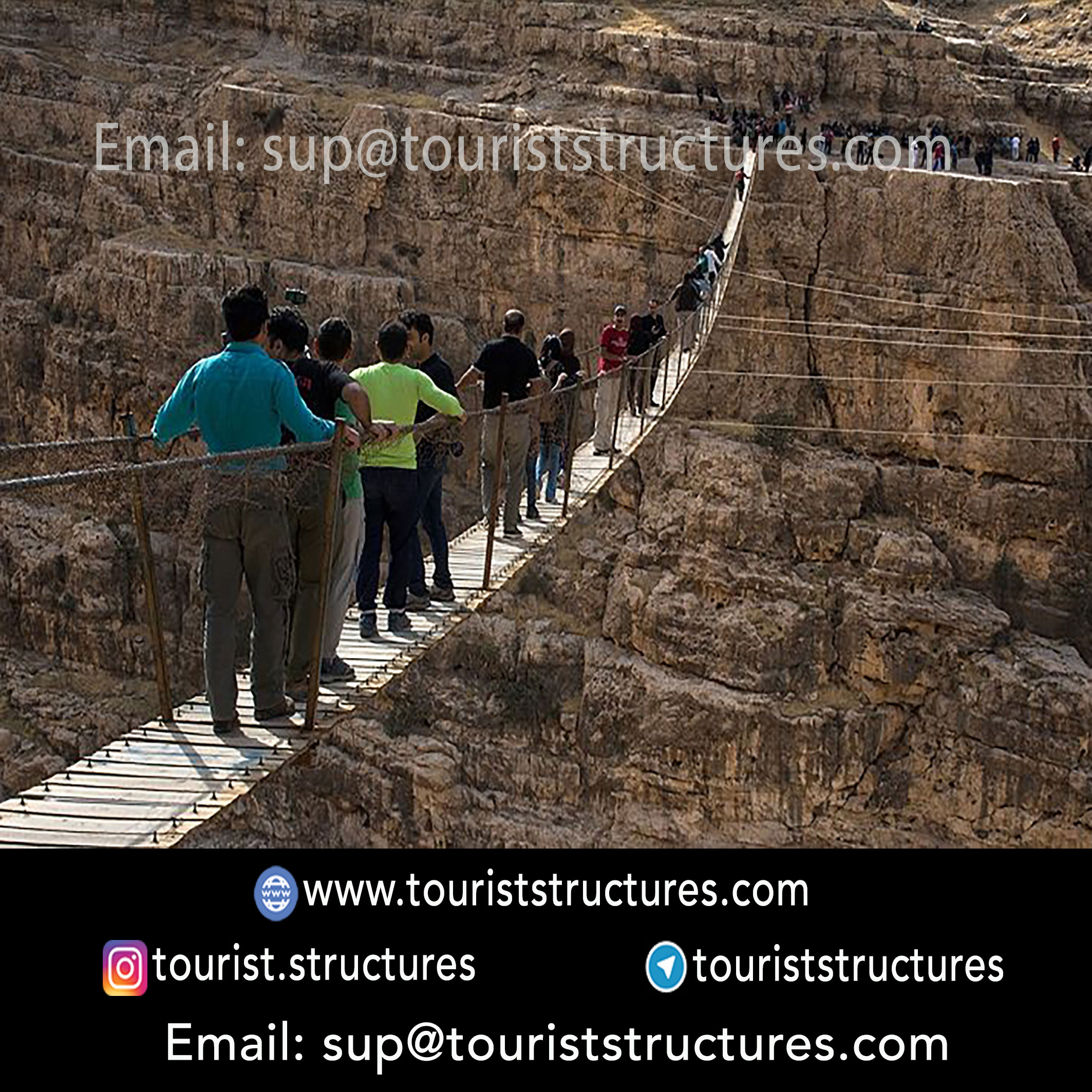
Examples include the Meshginshahr Suspension Bridge, the Pirtaghi Bridgein Khalkhal, the Valley of Khazineh Suspension Bridge in Lorestan, and the Namak Abroud Suspension Bridge, among others.
Examples of suspensionbridges in Iran
Pasargad Company stands at the forefront of the industry, specializing in the design, structural calculations, construction, and implementation of suspension bridges. Our approach hinges on engineering expertise and adherence to global standards.
Below is a video ofthe suspension bridge
Selecting any of the green options will navigate you to the corresponding sub-pages of the website.